
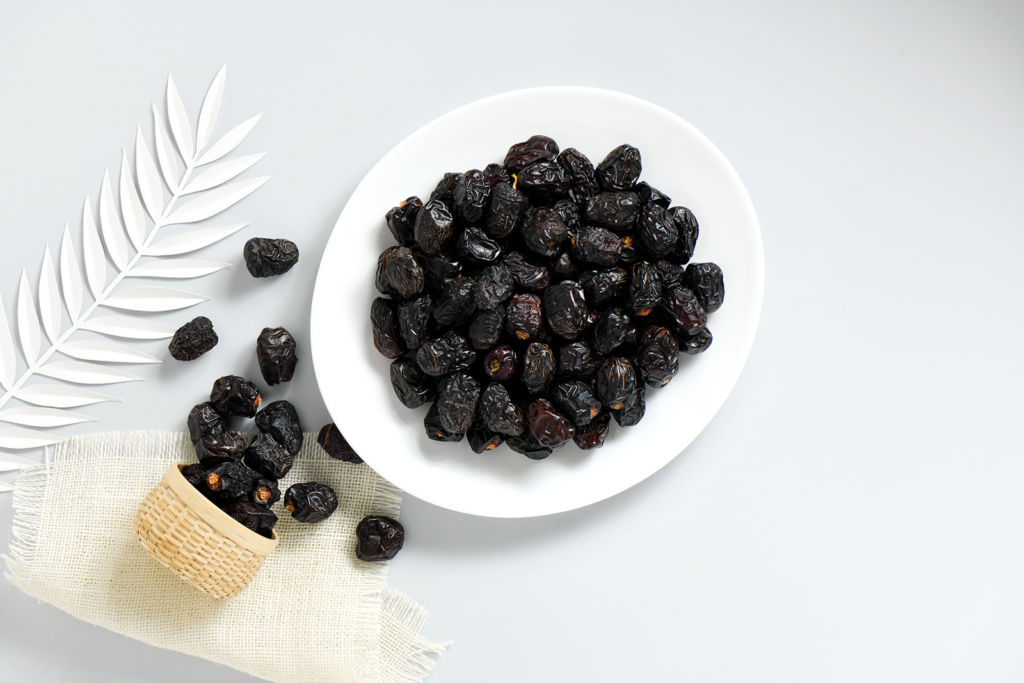
Kurma Nabi is Ajwa, not Mazafati
People searching "Kurma Nabi" often land here expecting Mazafati, since both are dark, soft dates. They're not the same thing. Kurma Nabi refers specifically to Ajwa, grown around Madinah in Saudi Arabia. Mazafati comes from Bam and Jiroft in Iran's Kerman province, a different tree, different soil, and a different climate entirely. Worth clearing up before you order the wrong thing.
How the two compare
Ajwa is drier and firmer, with a near-black wrinkled skin and a milder, less syrupy sweetness. Mazafati is wetter and softer, almost glossy, with a stronger caramel-like sweetness and a shorter shelf life outside the fridge because of its higher moisture content. Neither is "better." They suit different uses. Ajwa travels well and keeps for months if stored right; Mazafati is best eaten within weeks unless it's frozen.
Why Kurma Nabi sells out before Ramadan
Demand for Ajwa jumps in the weeks before Ramadan because of the tradition of breaking the fast with a date at iftar, and suppliers often run short of good stock by the second half of the month. Eid brings a second wave as dates get passed around as gifts, reason enough to check prices early rather than wait until stock thins out.
Buying genuine Ajwa here
If you specifically want Kurma Nabi rather than Mazafati, check the label for "Ajwa" and ask where it's from. Madinah-origin dates should be described as such, not just "premium dates." Texture is the tell: Ajwa is soft but holds its shape, with a matte dark skin rather than the shiny, almost wet look of fresh Mazafati. For a wider look at how different varieties stack up, see our piece on unique and rare date varieties.
Where Mazafati still wins
If what you actually want is the fresh, syrupy eating experience Mazafati is known for, don't substitute Ajwa just because the name Kurma Nabi sounds more familiar. Mazafati is better suited to eating fresh within days of arrival, mixed into desserts, or served at gatherings where texture matters more than shelf life. Our guide to Malaysian and Middle Eastern date varieties breaks down which type suits which occasion. As a rule of thumb: if the order is for gifting or long storage, lean Ajwa. If it's for immediate eating or a dessert recipe, Mazafati is the better fit, and a mixed order covering both is common for shops that serve both kinds of customer.
Storing either variety
Both keep best in an airtight container away from heat. Ajwa tolerates room temperature short-term but lasts longer refrigerated; Mazafati should go straight in the fridge or freezer given its higher moisture. For a broader rundown of pricing across grades, our Malaysia date price guide covers what different grades typically cost.