
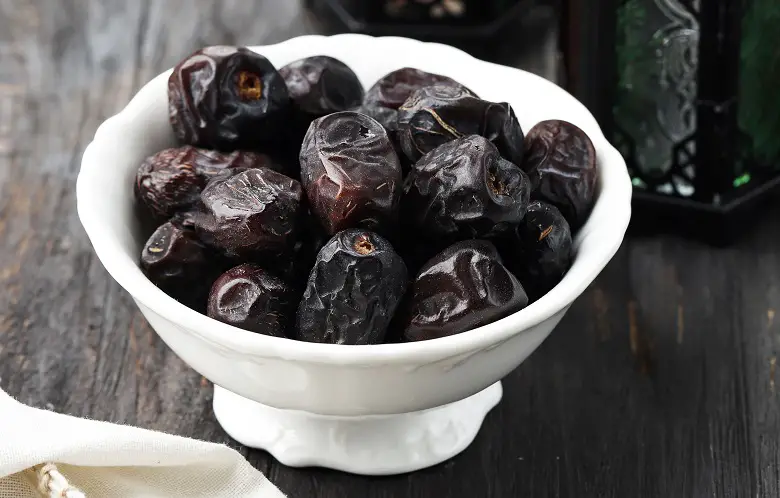
Most trays labelled "kurma tempatan" at a Malaysian pasar or online store aren't grown here — date palms need a long dry heat that this climate doesn't give consistently, so almost everything on the shelf started life in Iran, Saudi Arabia, Tunisia, or the Gulf. What varies is how far it travelled and who repacked it before it reached you. Knowing that changes how you shop.
What "local" usually means at a Malaysian kedai
When a shop says local, they usually mean locally distributed and repacked, not locally grown. A pemborong kurma malaysia typically imports in bulk — often 10kg or 20kg cartons — then breaks that down into smaller retail packs for supermarkets and online orders. The dates themselves are still Barhi, Sarahwi, Medjool or Deglet Noor from their country of origin; the "local" part is the packing, the price point, and sometimes a Malaysian food-safety label.
Reading the pack, not the sign
The shop sign or listing title won't tell you much. Flip the pack over instead:
- Country of origin should be printed somewhere on smaller repacked bags — Iran, Tunisia, Saudi Arabia are the common ones for supermarket dates.
- A harvest or packing date matters more than a "best before" printed six months out, since dates are semi-dried and don't spoil the way fresh fruit does.
- Loose, unbranded trays at wet markets usually skip all of this — fine if you trust the stall, riskier if you're buying for a specific grade.
Barhi and Sarahwi: why they show up as "local specialities"
Barhi dates have a light crunch when sold semi-ripe, with a honey note that fades once they're left to fully dry. Sarahwi runs darker and softer, closer to caramel. Neither is grown commercially in Malaysia; both arrive as imports, but they're marketed here as the shop's specialty line because demand for them is strong among Malaysian buyers specifically, not because of where they were farmed.
Where imported staples like Medjool and Deglet Noor fit in
Shops that don't specialise tend to carry the bigger international names alongside whatever local speciality they stock. Medjool is large, soft, and deep caramel in flavour — usually the most expensive tray in the shop. Deglet Noor is firmer and less sweet, often used more for cooking and baking than eating straight. If a shop carries both plus a local speciality line, that's usually a sign they're buying from more than one pemborong kurma supplier rather than a single source.
A quick way to check before you buy
Press the date gently. It should give slightly and feel tacky, not glassy-hard or crusted with sugar crystals on the outside — that crystallising is a sign of age or poor storage, not a natural feature of any variety. If you're buying in bulk for an event, ask the seller which harvest season the stock is from; a shop that can answer that question directly, rather than "always fresh," is usually the one that actually tracks its own wholesale sourcing.
For current stock and pricing across varieties, check our contact page — we can tell you exactly which origin a given batch came from.