
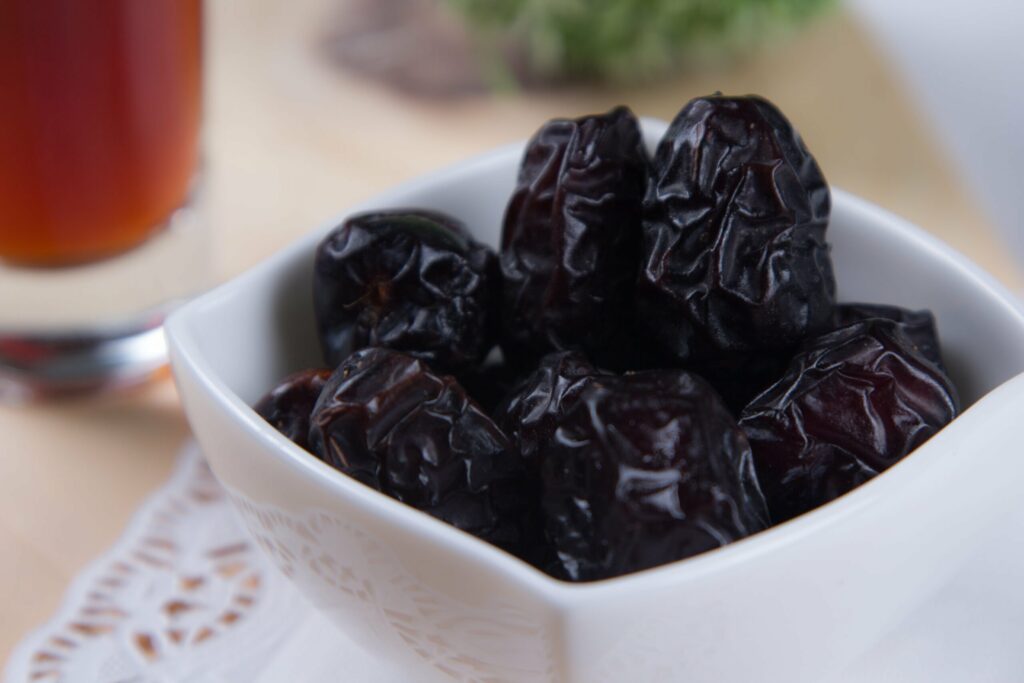
Mazafati is technically a "rare" variety by global trade volume — most of the world's date exports are Medjool, Deglet Noor or Ajwa, and Mazafati barely registers next to them despite being one of Iran's largest domestic crops. Worth putting it next to a few other under-recognised varieties to see where it actually sits.
Mazafati: soft, dark, and mostly eaten fresh at home
Grown mainly around Bam and Jiroft in Iran's Kerman province, Mazafati is a dark, almost black date with a notably soft, moist texture — wetter than Medjool, which is part of why it's traditionally sold and eaten closer to harvest rather than dried and stored long-term. That moisture content is also the reason cold storage and quick turnover matter more for Mazafati than for drier varieties.
Hayyani
Saudi Arabia's Hayyani shares Mazafati's dark colour but not its moisture — it's chewier, denser, with a prune-and-caramel depth rather than Mazafati's softer, almost custardy bite. Both varieties get overshadowed by Medjool in export markets despite being staples at home.
Khalas
The UAE's Khalas sits at the opposite end of the texture spectrum: medium size, golden-brown, firmer bite, a light citrus note. Where Mazafati is an eating-fresh date, Khalas holds up better over time, which is why it's more common in dried or semi-dried form outside the Gulf.
Sukkari
Oman's Sukkari, light amber and almost melting in texture, is closer to Mazafati in softness but built around a floral, honey-like sweetness rather than Mazafati's darker, less sugary profile — Mazafati is sweet, but not as aggressively so as Medjool or Sukkari.
Buying Mazafati specifically
Because of the moisture content, storage matters more here than with most other varieties. Ask a supplier how the stock has been kept — refrigerated and moved quickly is what you want; anything left at room temperature for weeks starts to lose texture and can develop an overly fermented edge. Freshness, more than grade labelling, is the real quality signal for Mazafati.
Grading terms that apply cleanly to drier varieties don't map as well onto Mazafati. A supplier describing it as "Jumbo" is talking about size, which still matters, but size tells you little about how fresh the batch is. Colour is a better clue than grade labels here: a very dark, almost black skin with a slight sheen usually means recent harvest, while a duller, slightly wrinkled skin suggests the stock has been sitting for a while, even if it's technically still within its shelf life.
For a texture and price comparison against the variety most Malaysian buyers already know, see our note on Medjool, and our Medjool comparison piece for a fuller side-by-side. We've also covered local versus imported kurma more broadly, and for buyers curious about another under-stocked Iranian variety, see our piece on Kurma Mariami.
The short version
Mazafati, Hayyani, Khalas and Sukkari are all everyday dates somewhere in the world — they're only "rare" here because the market hasn't caught up. If you already buy Mazafati, you're closer to that wider world of date varieties than most buyers realise.