
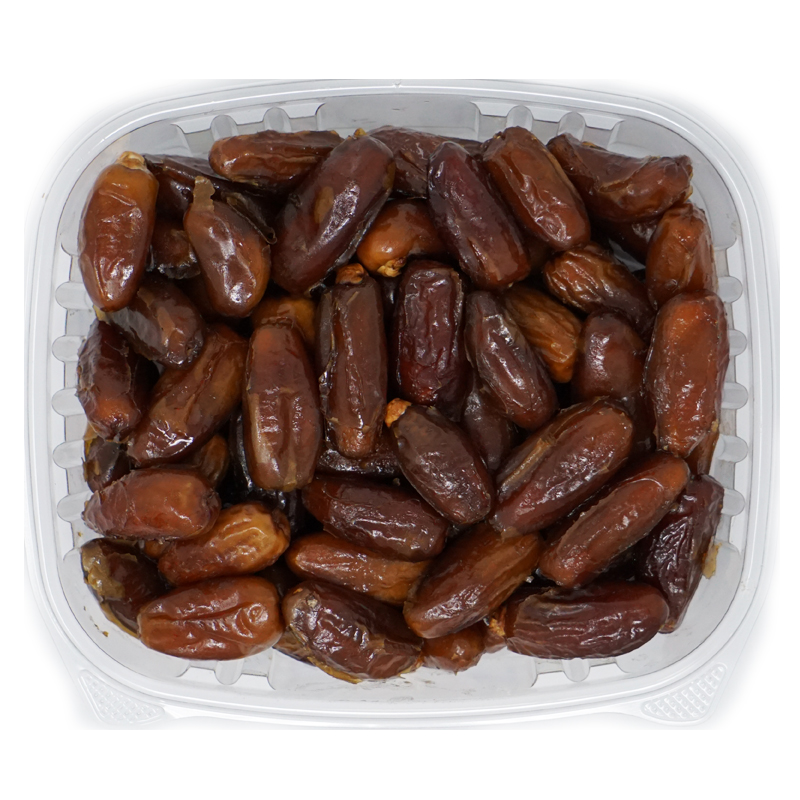
Why tangkai dates are packed the way they are
Kurma Tangkai keeps the stem on the fruit. That single detail changes almost everything about how a distributor handles the box: less fruit-to-fruit contact, slower moisture loss, and a firmer product that survives a longer trip between farm and shelf. A Kurma Tangkai case built this way costs more to pack than loose dates, but it buys shelf life the loose format can't.
Mazafati is the opposite case
This site specialises in Mazafati, and Mazafati sits at the other end of the handling spectrum. It's soft, moist, and picked closer to the rutab stage than a firmer, semi-dry variety like Deglet Noor tangkai. Pack it stem-on the way you'd pack a firm date and it bruises in the box. A distributor moving Mazafati needs cold storage from the farm gate onward and a much shorter window between import and sale — there's no equivalent of "leave it on the shelf for a month," which a well-packed tangkai case can often tolerate.
That contrast is the reason a serious distributor treats each variety as its own logistics problem rather than applying one packing standard across the catalogue. Firm, semi-dry, stem-on stock like tangkai trades packing cost for shelf life. Soft stock like Mazafati trades a shorter shelf life for a texture most buyers specifically want.
What a distributor actually checks before taking on a tangkai line
- Stem condition on arrival — snapped or broken stems mean the case was mishandled somewhere upstream, and that batch should be discounted or rejected, not sold at full price.
- Moisture consistency across the case — a mix of overly dry and overly moist fruit in the same box usually means poor storage conditions before it reached the distributor.
- Turnover speed at the retail end — tangkai's longer shelf life is only an advantage if the retailer isn't sitting on stock for months past its useful window.
- Origin paperwork — knowing whether a batch is genuinely Deglet Noor tangkai or a mixed lot matters for both pricing and repeat customers who buy on that name.
Buying tangkai as a consumer
Look for stems that are still attached and intact, not snapped loose in the packaging — that's the first sign of rough handling. Check high-quality dates against the price: tangkai usually costs more per kilogram than the same variety sold loose, and that premium should track with visibly better condition, not just packaging. If you're buying in bulk rather than a single pack, ask the seller directly about how long the stock has been sitting in storage.
For a broader look at how pricing tracks grade and origin across the catalogue, see our guide to date prices and grading systems in Malaysia. If you're buying around Ramadan specifically, timing matters too — see our notes on the Ramadan rush for tangkai stock. And for background on how reputable dates distributors price wholesale lots, our wholesale pricing guide breaks down the main cost drivers.