
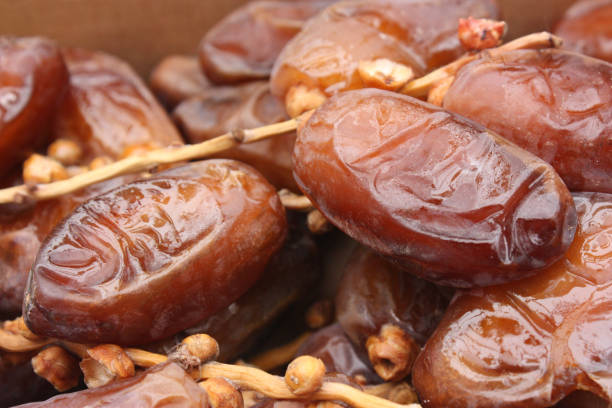
A bunch of kurma tangkai on the table is one of the more recognisable sights of Ramadan in Malaysian homes — dates still on the stem, arranged in a box or a tray, usually the first thing set out for a visitor before anything else is served. The tradition is older than the packaging: giving dates on the stem rather than loose is a way of showing the fruit is whole and untouched, closer to how it left the palm.
Why tangkai is the gifting choice
Loose dates are for eating; tangkai is for giving. The bunch presents better — it looks like what it is, a harvest, rather than fruit scooped out of a container. That is why dates suppliers put their better grades on the stem for the Ramadan season specifically: buyers picking a gift box are paying as much for the presentation as the fruit itself.
It also happens to keep better. The stem protects the point where the fruit was cut, so a bunch of kurma tangkai generally outlasts the same dates sold loose, by a couple of weeks under normal room conditions. Handy if the box is meant to sit out over several days of visitors rather than be finished in one sitting.
Reading a bunch before you buy
Look along the stem first — it should be pliable, not dried to the point of snapping. A stem that snaps cleanly rather than bending has likely been off the palm for a while. The dates themselves should be plump with a slight wrinkle in the skin, not swollen and glossy, which usually points to added moisture rather than natural ripeness.
Grading matters more than the bunch itself. A well-presented tangkai bunch of a middling grade still tastes like a middling date — check the grading and pricing the seller quotes rather than judging on looks alone.
The Ramadan supply squeeze
Tangkai stock is harder to source in volume than loose dates because packing it without damaging the bunch takes more care and more labour at the sorting stage. Suppliers who commit to tangkai for Ramadan usually place those orders well before the season starts, since a broken or bruised bunch cannot be sold as a gift item and gets downgraded to loose stock instead. That is part of why tangkai tends to sell out faster than loose dates once Ramadan is under way — there is simply less of it to begin with.
Keeping a gift bunch fresh
If you are holding a bunch to give later rather than serving it immediately, keep it out of direct sun and somewhere dry — a kitchen counter away from the stove is fine for a week or so. Refrigeration extends that further but firms up the fruit, which changes the texture guests notice when they pull one off the stem. For dates you plan to keep rather than give away, the tangkai tradition ties back to older customs around kurma nabi and why certain varieties carry more weight as gifts during the fasting month than others.