
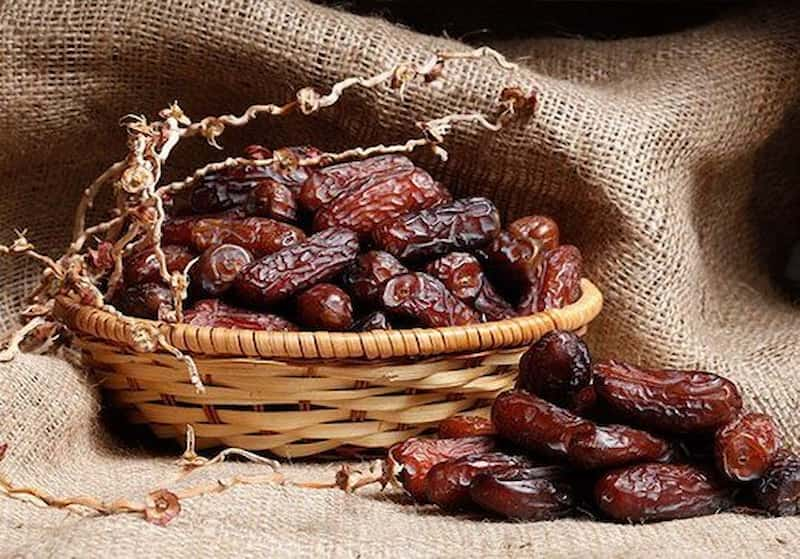
Mazafati gets sold under more than one name in Malaysia. You will see "Rotab Mazafati Bam" on one pack and "kurma madu" on another, and it isn't always obvious whether the two packs hold the same date. Before you can say whether a Mazafati price is fair, you need to be sure what the number covers. Here is how to read one.
Make sure it is Mazafati
Mazafati comes from Bam, in Kerman province, Iran. It is a dark date, very soft and high in moisture. Malaysia has no commercial date-growing trade, so every Mazafati here is imported, and the label should name both the variety and Iran. "Kurma madu" is a market name that gets used for Mazafati, but it is a nickname, not a variety. When a pack only says "kurma madu", ask the seller which date is inside. The post on where the "madu" label gets misapplied covers this in more detail.
Don't try to settle it by taste or colour. Those checks can't reliably confirm that a box holds genuine Mazafati. The written label and the seller's description are what you go on.
Other Iranian dates are a different buy
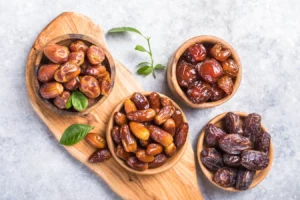
Several Iranian varieties can end up on the same shelf as Mazafati, and their prices shouldn't be lined up against it as if they were equal. Mariami is dark, semi-dry and chewy. Piarom is dark and semi-dry with a thin skin, and it comes from Hormozgan, not Bam. Sayer, also traded as Stamaran, is from Khuzestan and is amber-brown and semi-dry. Mariami and Piarom are two separate varieties, even when a listing mentions both names together.
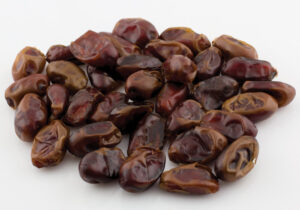
The photo here is Sayer. Set its amber-brown, semi-dry fruit next to a dark, very soft Mazafati and it is plain that they are two different products. Compare a Mazafati price with another Mazafati price, not with a semi-dry date.
A cold-stored date sold all year
Mazafati needs refrigeration. It is cold-stored and sold year-round, so seeing soft "rotab" Mazafati on sale months after harvest is normal and nothing to be suspicious of. Rotab, or rutab, is the trade word for the soft, fresh-ripe stage, as opposed to tamr, the drier fully ripe stage.
That has two practical sides for a buyer. Ask how the dates have been kept before they reach you, and when ordering for delivery, find out how they will be packed for the trip. Once they arrive, they go in the fridge. The post on why Mazafati is sold and stored like a fresh date explains the ripeness stages properly.
Grades and pack weight
Mazafati may carry a grade like A, AA or Jumbo. Those letters are each importer's own size sorting, not an international standard, so compare grades within one seller only. Between sellers, go by net weight. Divide each price by the kilos of dates in the pack, leaving out the box, then add any delivery charge. That per-kilo figure is the one to compare. For a worked look at how sellers grade and price, see comparing sellers properly. To practise on a real price list in ringgit, the Green Diamond Harga Kurma page sets products out by variety, grade and pack size.
Busy months
Demand for dates peaks before and during Ramadan. Hari Raya, weddings (hantaran), kenduri and umrah gifts are the other busy times. Gulf and Middle-East dates are mostly harvested from late summer to autumn, roughly August to November, with new-season stock reaching Malaysia some weeks later. Because Mazafati is held in cold storage, it is on sale outside that window too, but if you need a fixed amount for a set date, place the order early and get the grade and net weight confirmed in writing.
Other reading
If you are also pricing Ajwa, pengedarkurma.com has a guide to purchasing date fruits of that variety in Malaysia. For organic stock, the post on organic dates wholesale helps you sort through your desired date fruit products.