
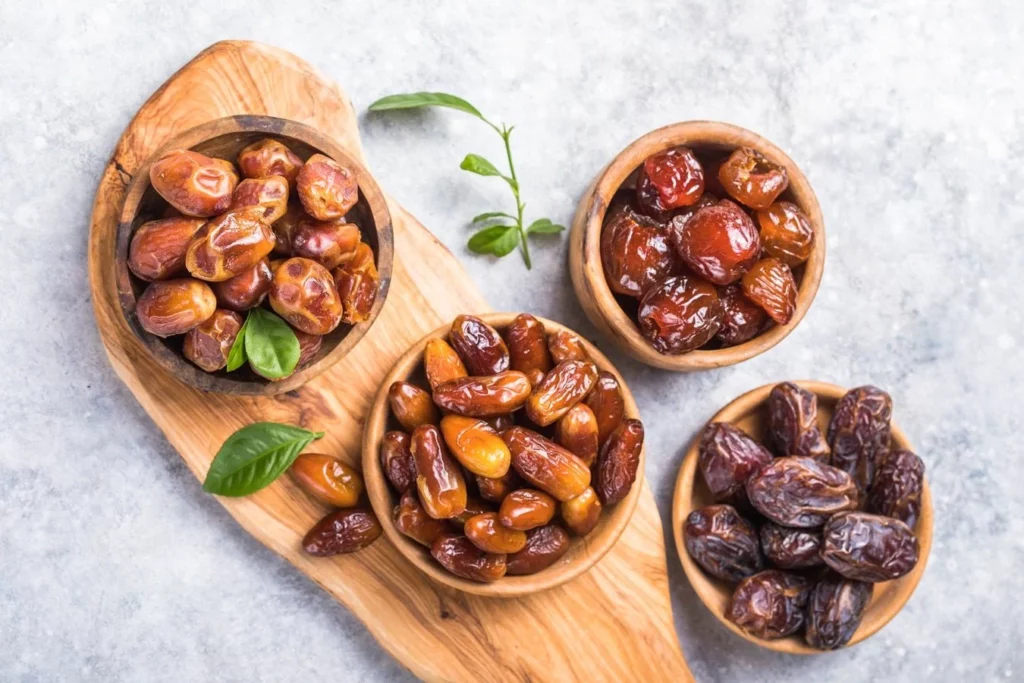
Two dates, two very different shelf clocks
Buy a box of Mazafati and a box of Deglet Noor on the same day, and they will not last the same amount of time. A dates wholesaler in Malaysia has to plan around that difference, not just around taste. It changes how the stock is stored, how fast it has to move, and what a buyer should ask before ordering.
Why moisture sets the clock
Mazafati and Medjool sit at the wet end of the date family — soft flesh, high moisture, almost sticky to the touch. That softness is exactly why it needs a chiller. Left at room temperature in Malaysia's humidity, a soft date starts fermenting at the surface within days, and the skin can develop a faint white bloom that buyers mistake for mould (it is usually just sugar crystallising, but a wholesaler should still not ship stock that looks like that). Deglet Noor and Zahidi, drier and firmer, tolerate weeks at room temperature without the same risk. Ajwa dates sit somewhere in between — semi-soft, with a shorter but still workable window outside the fridge.
What this means for storage
A wholesaler carrying both ends of that range needs two storage regimes, not one. Soft varieties: chilled from the moment they land, ideally 0–4°C, moved out within a few weeks. Firmer varieties: cool, dry, out of direct sun, and they can sit for months. Mixing the two in one warm storeroom is the fastest way to lose a batch of Mazafati while the Deglet Noor next to it is fine.
What it means for a buyer
If a listing doesn't say how a date was stored, ask. A soft variety that has been sitting warm for two weeks is already past its best even if it still looks intact — the texture goes from supple to slack, and the flavour flattens. This matters more for a dates wholesaler Malaysia buyer sourcing for retail than for someone buying a single pack for home, because a whole case ages the same way at once.
Reading the signs on arrival
A soft date that has held its condition feels supple, not wet or slack, and the skin should not be sticky enough to glue the fruit together in a clump. A firm date should still have some give when pressed — bone-dry and brittle means it has been stored too long or too dry. Either extreme is worth flagging back to the supplier rather than accepting.
Pricing follows the same logic
Because soft varieties move faster and spoil sooner, they usually carry a shorter shelf life on the shelf price too — a wholesaler prices in that turnover risk. Firmer, longer-lasting varieties can be bought further ahead of demand without the same pressure. Worth checking current grading and pricing before comparing across varieties, since grade affects price as much as shelf life does.
Key points
- Soft varieties (Mazafati, Medjool) need chilled storage and fast turnover; firm varieties (Deglet Noor, Zahidi) tolerate room temperature for weeks or months.
- A white bloom on soft dates is usually crystallised sugar, not mould — but stock showing it should still not ship.
- Ask a supplier how a soft-variety batch was stored before buying in volume; a warm two weeks already changes the texture.
- Press-test on arrival: supple, not slack or sticky, for soft dates; some give, not brittle, for firm dates.
- Shelf-life risk is part of why soft and firm varieties are priced differently — see the Medjool price breakdown and check nutritional value by variety for the fuller picture.