
A real magic pill for fat loss would have to pass a simple test before any other: you would need to know what is in it. For hundreds of weight-loss supplements flagged by US regulators, that test has already failed. A 2018 analysis of United States Food and Drug Administration (FDA) warnings counted them, and it is a better starting point than any label.
What ten years of FDA warnings found
Researchers at the California Department of Public Health went through the FDA's database of tainted products sold as dietary supplements, covering 2007 to 2016 (Tucker and colleagues, PubMed 30646238). They counted 776 adulterated supplements, meaning products containing unapproved ingredients, from 146 different companies.
Weight-loss products made up 317 of those, or 40.9%. The hidden ingredient found most often in them was sibutramine, a drug, present in 269 of the 317 (84.9%). Across all categories, 157 products (20.2%) held more than one unapproved ingredient.
Warnings did not always end the problem. Twenty-eight products were named in two or three warnings more than six months apart, and 19 of them (67.9%) were reported with new unapproved ingredients the second or third time. The authors conclude that active pharmaceuticals continue to turn up in supplements, especially those marketed for weight loss, even after FDA warnings, and that these drug ingredients could cause serious adverse health effects through accidental misuse, overuse, or interaction with other medications.
Bought online, posted from abroad
One figure from that study matters for anyone who shops on the internet. In 2014 to 2016, 117 of 303 adulterated samples (38.6%) were picked up through online sampling, and 104 (34.3%) through checks on international mail. Between them, those two routes account for nearly three in four of the flagged samples in that period.
That does not mean every capsule sold online is tainted. The study counted products the FDA flagged, not the whole market. It does mean the pill with the boldest promise is the one to be most careful with.
The bottles that contain what they say
Suppose the label is honest. The evidence is still thin. A 2021 systematic review by Batsis and colleagues (PubMed 34159755) opens by noting that supplements and alternative therapies are sold as a panacea for weight gain because of minimal regulatory requirements to show they work.
The team found 315 randomised controlled trials covering 14 kinds of supplement or therapy. Only 52 (16.5%) were judged low risk of bias with enough data to support a result. Of those, 16 reported a significant difference in weight between groups, ranging from 0.3 to 4.93 kg. The review's conclusion is that these products have a limited high-quality evidence base.
Where real weight-loss medicine fits
There are genuine weight-loss medicines, and the NHS is plain about them. Its Better Health weight page says that on the NHS they are only suitable for some people, depending on things like BMI and whether a healthcare professional thinks the medicine is right for you. It adds: "Only take weight loss medicine if it has been prescribed for you. These medicines can cause serious side effects."
So the useful split is not pill against no pill. It is a prescribed medicine with a known dose against a bottle whose contents nobody has checked.
The kitchen version of the magic pill
What is left is food you can see. The NHS fibre page says government guidelines put the daily target at 30g of fibre, while most adults eat about 20g. It suggests fresh or dried fruit for dessert, and says dried fruit is better eaten as part of a meal than as a between-meal snack, because it is sticky and can raise the risk of tooth decay.
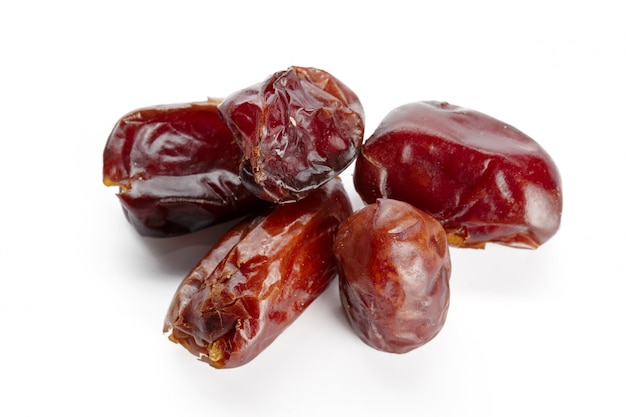
The NHS 5 A Day page names dates alongside currants, sultanas and figs as dried fruit. It says 30g of dried fruit, about the same as 80g of fresh fruit, counts as one portion, and should be eaten at mealtimes. In USDA FoodData Central, Deglet Noor dates (FDC 171726) carry 8.0g of fibre and 282 kcal per 100g, so a 30g portion gives about 2.4g of fibre for about 85 kcal. That is roughly 8% of the 30g fibre target, with nothing hidden in it and nothing magic about it either.
About the dates on this site
Mazafati comes from Bam in Kerman province, Iran. It is dark, very soft and high in moisture, needs refrigeration, and is cold-stored so it can be sold all year. The about page says the site serves retail and wholesale buyers (runcit & borong), with delivery across Malaysia and customer service on WhatsApp. The number for quotes is on the contact page, and more date articles are on the blog. A link kept from the earlier version of this post points to Pembekal Kurma Selangor.
This article is general information, not personal advice. If you are thinking about any weight-loss product or medicine, talk to your doctor or pharmacist first.