
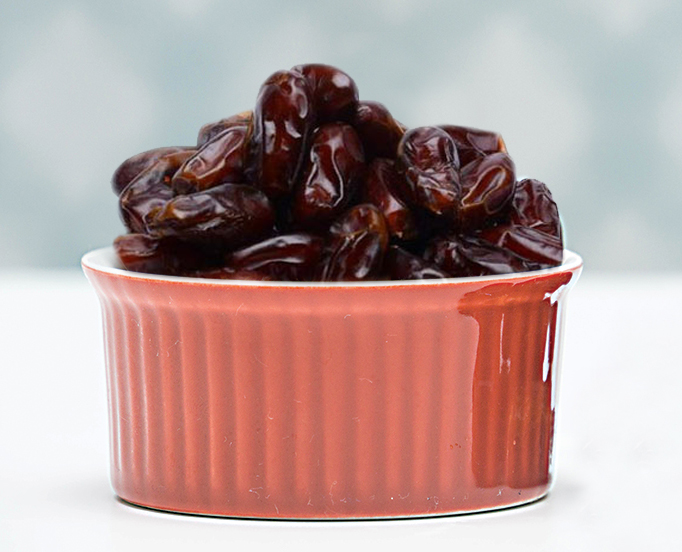
Mazafati and Sayer are both soft Iranian dates, both dark-skinned, and both often lumped together by buyers who haven't tried them side by side — but they're grown in different regions and aimed at different markets.
Mazafati comes primarily from Kerman province and is bred and handled as a premium fresh-eating date: very dark, almost black-purple, with a moist, tender bite and a shorter shelf life that reflects its fresh-market positioning. Sayer, grown mainly in Khuzestan, is a different story — it's one of Iran's highest-volume commercial varieties, reddish-brown rather than near-black, and much of the crop is destined for paste, syrup and vinegar production rather than the fresh-fruit shelf.
Iranian Sayer dates that do reach the retail market as whole fruit are the better-graded share of the harvest, but even then the texture leans stickier and the flavour more molasses-forward than Mazafati's cleaner, almost wine-like sweetness. If you've tried Mazafati and are wondering whether Sayer tastes the same — it doesn't. Sayer is sweeter in a heavier, less nuanced way, which is exactly why it suits cooking and processing better than fresh snacking.
Price reflects the difference too. Mazafati commands a premium as a fresh-market product with tighter cold-chain requirements from farm to shelf. Sayer, especially processing-grade Sayer bought for paste or syrup, is considerably cheaper per kilo — a useful fact if you're comparing the two purely on cost rather than on eating experience.
Storage is broadly similar for both — refrigerate in an airtight container — but Sayer tolerates a slightly wider temperature range without spoiling as fast, since it has less of the very high moisture content that makes Mazafati so perishable.
If you came here comparing varieties, browse our Sayer Dates and Dates Fruit categories, or see the full range of premium dates on the home page.